Why Shared Festival Rituals Feel Familiar
Why shared festival rituals feel familiar: see how greetings, repeated gestures, and closing customs help newcomers recognize a gathering and join in.
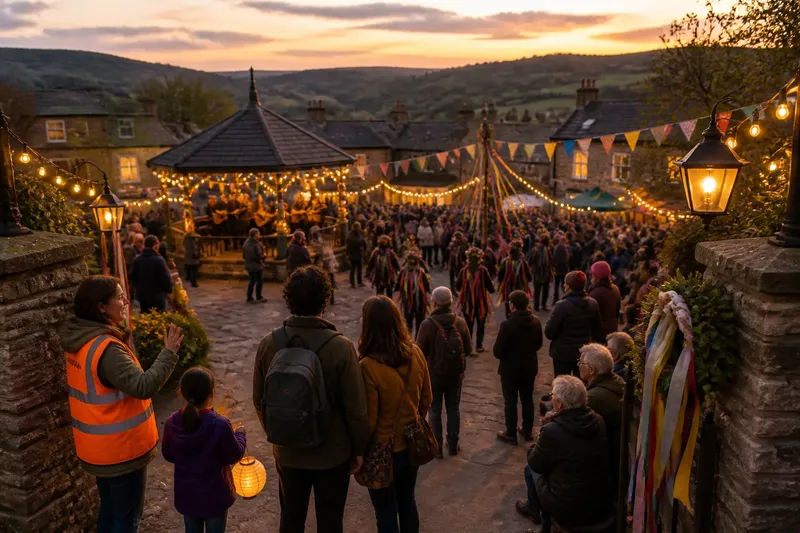
At the entrance to a neighborhood festival, someone offers a nod, a volunteer points toward the music, and a familiar bell sounds from the square. Those small cues can make the gathering feel recognizable before you know anyone there. Shared festival rituals feel familiar because repeated actions give people simple ways to recognize a gathering and participate in it.
That familiarity does not require every attendee to know the same words or history. A ritual can be as modest as making room for a procession, greeting a returning neighbor, or lingering while the last song ends. Here are six ways those repeated actions help a festival become a shared occasion.
1. Greetings turn arrival into participation
A greeting marks a change: you are no longer simply passing the square; you have arrived among other people. It might be a spoken welcome, a wave from the gate, a hand raised in recognition, or a familiar phrase exchanged with a neighbor. When people repeat that gesture, the entrance becomes part of the festival rather than just a route into it.
The greeting also leaves room for different levels of involvement. A newcomer can return a wave without knowing a local song or joining a procession. Someone who wants to stay at the edge can still acknowledge the people around them. Small, optional gestures make belonging easier to approach.
At a local lantern gathering, for instance, a volunteer might welcome arriving families with a brief “Good to see you.” A visitor who answers with a smile has already taken part in one of the event’s customs, even before choosing where to stand.
Keep the welcome easy to return, not demanding.
2. Repeated cues help people find the gathering’s rhythm
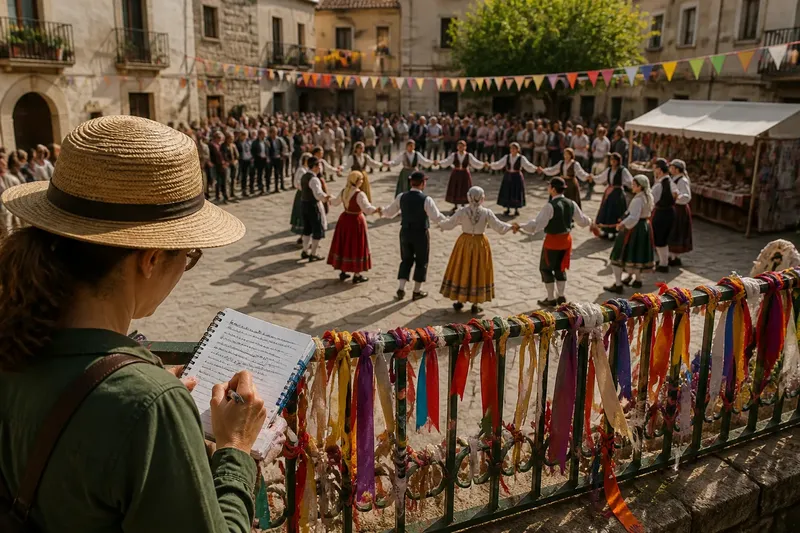
Festivals often have moments that signal what comes next: a drum pattern before a dance, a bell before a shared song, or a hand raised before a group begins moving. These cues are useful because people do not need a printed schedule in hand to sense a transition. They can watch and listen, then respond when the moment arrives.
A recurring cue also gives newcomers a chance to learn by observation. They might see people turn toward the musicians, form a loose line, or pause their conversation. The action becomes legible through the people doing it, not through a long explanation delivered from a stage.
Imagine a small harvest gathering where a short melody always signals the start of the procession. A first-time visitor hears it, notices neighbors moving toward the street, and joins the walk behind them. The expected result is a clearer invitation to participate, without requiring the visitor to know the melody’s background.
Let one recognizable signal do the work of several announcements.
3. Shared gestures make room for different kinds of participation
Not everyone will want to dance, sing, carry a banner, or walk at the front. A shared gesture can give people a way to join without requiring the same energy or ability from every participant. Clapping along, stepping aside to let a procession pass, or turning toward a speaker can all acknowledge the same moment.
This flexibility matters in a crowd that includes children, older residents, people with limited mobility, and visitors who are still learning the custom. The point is not to flatten every role into one uniform action. It is to make the gathering’s main moments visible enough that people can choose an appropriate response.
Organizers can help by keeping sightlines open and leaving a comfortable place for observers near, but not inside, an active route. Performers and participants can then share a moment with people who prefer to watch. A ritual feels welcoming when watching is treated as a real way to attend.
4. Familiar phrases and songs carry memory between gatherings
A repeated phrase or tune can bring back the shape of earlier festivals. Someone hears a refrain and remembers standing beside a grandparent, while a child learns the same words by listening to the crowd. The song does more than entertain: it links separate visits through a sound people recognize together.
That memory can be personal and communal at once. A resident may attach a particular meaning to a verse, while a visitor simply enjoys its melody. Both can take part in the same chorus, even if their knowledge is different. Familiarity grows through use, not through a test of who knows the most.
Organizers can make a recurring song easier to follow by keeping its opening clear and leaving space for the crowd to respond. A printed lyric card may help where appropriate, but the sound of people singing together is often its own invitation.
Choose a moment people can recognize by listening, even from the edge.
5. Small acts of courtesy show how the crowd moves together
Some customs are less like performances than shared manners: leaving a passage open, making space for a stroller, or waiting for a group to finish before crossing its route. These actions rarely draw applause. Still, they help people understand that the festival has a social rhythm, not just a program of events.
Courtesy is especially visible where different activities overlap. A procession may pass near food stalls; musicians may need a clear patch of ground; visitors may pause to greet someone they know. A familiar habit of yielding space can keep those moments from becoming a tangle, while showing newcomers how to move with the crowd.
These customs work best when they are modeled rather than scolded into place. A volunteer can gently point toward an open route, and regular attendees can leave room without making a show of it. People learn the pattern through the way others make it possible.
6. Closing gestures let people leave as part of the gathering
The end of a festival can be a ritual in its own right. A final song, a last wave to the musicians, a shared pause, or a simple thank-you gives the crowd a signal that the event is drawing to a close. Without such a moment, people may drift away in fragments, unsure whether the gathering has ended or merely paused.
A closing gesture does not need to be grand. Its value lies in making the transition visible: people can acknowledge one another, collect their belongings, and depart without feeling they missed an unspoken cue. Regular attendees may recognize the ending immediately; newcomers can follow what they see and hear.
For a neighborhood dance, the musicians might play one familiar final tune before packing their instruments. Someone attending for the first time hears the last song, sees people exchange goodbyes, and understands that it is time to head home. The expected result is a more legible ending, not a demand that everyone stay until the final note.
What makes a festival ritual easy to join?
Do newcomers need to know the meaning behind a ritual?
Not always. A clear gesture, rhythm, or cue can make participation understandable before its history is explained, while a short explanation can deepen the experience for people who want one.
Can someone take part by watching?
Yes. Watching a procession, listening to a song, or observing a greeting can be a genuine form of attendance. Leave space for spectators so joining does not depend on stepping into the center of an activity.
How can organizers keep a custom welcoming?
Make the cue visible, leave room for different levels of involvement, and avoid treating unfamiliarity as disrespect. If the meaning is important to a community, explain it in plain language without making newcomers perform knowledge they do not have.
Why do closing gestures matter?
They help people recognize that a shared moment is ending and give the crowd a natural way to say goodbye. A short, consistent closing can make departure feel like part of the gathering rather than an abrupt break.
Familiarity grows through repeated invitations
Shared festival rituals feel familiar when people can recognize them, see how others respond, and choose a way to join. A greeting at the entrance, a cue before a song, a courteous pause for a procession, and a closing wave each offer a different invitation. Together, they make a gathering easier to read without requiring every person to participate in the same way.
The most useful custom may be the smallest one people can return to next time. Offer a greeting, make room for the next person, or stay for the final song; those ordinary actions can help a festival feel shared again.