Festival Keepsakes Before the Souvenir Stall
Festival keepsakes include programs, tokens, and handmade objects. Learn how to choose a meaningful reminder and keep its story clear without collecting clutter.
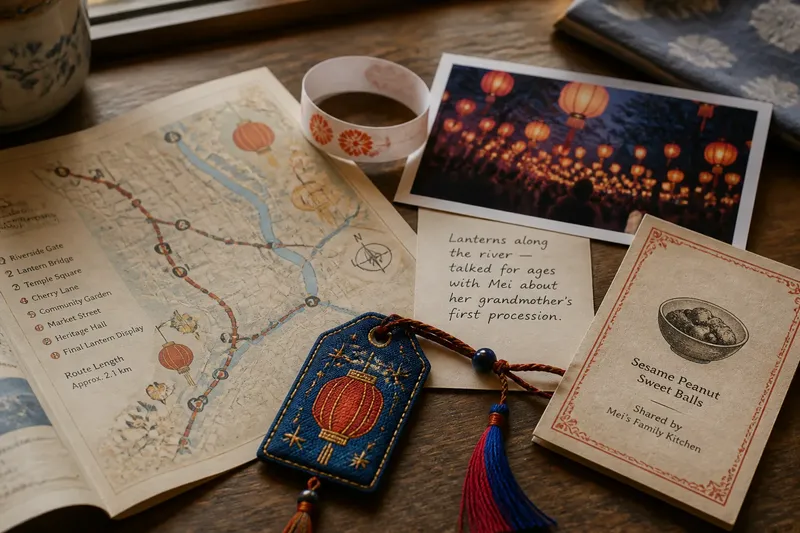
A folded program slips into your coat pocket; later, a paper wristband turns up between book pages. Festival keepsakes often start as ordinary traces of a day. Programs, tickets, and tokens have older kin in the practical objects people used during particular gatherings—not a single universal tradition, but items whose purpose depended on the event and place.
That distinction matters. A program records what was planned; a token may recall taking part; a handmade ribbon can point to a person or a shared custom. Knowing what each object can preserve makes it easier to choose a keepsake that fits your own memory.
Older festival keepsakes served particular local purposes
There is no single history of the festival keepsake. In one gathering, a printed handbill might announce a date and location. At another, a ticket or marked card might help organize admission or participation. These objects were made for practical use in their own setting; someone might later save one because it brought the day back to mind.
Printed programs could list performers, a procession route, or the order of ceremonies. Their first job was to guide people through an event, not to become collectibles. A program kept afterward could still offer a concrete record: names, wording, and the marks a visitor added while deciding where to go.
Tokens and handmade objects have different ties to a gathering. A token may recall an exchange or activity, while a ribbon or paper decoration may be connected to a local custom, a maker, or a particular season. What these objects mean varies by event, so the best clue is how they were offered and used there.
Choose a keepsake for the memory it can carry
Start with the detail you want to remember. If the event’s route or schedule matters, choose printed material. If you want to recall participation, a ticket or permitted token may fit. For a conversation or shared moment, a small object connected to that encounter can be more meaningful than a generic souvenir.
- Program or map: Check whether it names the event or shows the route you followed; if it does, keep it for a readable record, but if it does not, choose a more specific item or a brief written memory.
- Ticket or stamped card: Check whether its mark links it to something you did; if it does, save it as a participation reminder, but if it is indistinguishable from a spare, keep only the one that has a clear connection.
- Handmade object: Check whether it was offered for visitors to take and whether you know who made it; if both are clear, keep it as a reminder of the craft or exchange, but if ownership or permission is unclear, ask before taking or retaining it.
- Photograph: Check whether the image captures a detail you could not bring home; if it does, save it with a caption, but if it adds nothing beyond other images, select a more telling frame or let it go.
- Recipe or food-related card: Check whether it was shared for visitors to keep and whether it identifies the dish or maker; if so, retain it as a foodways memory, but if it is a borrowed copy, return it or ask permission to make a copy.
- Seasonal ornament or ribbon: Check whether it marks a recurring custom or a particular year; if it does, keep it as part of that story, but if it is fragile or difficult to store, photograph it and note why it mattered.
Say you attend a neighborhood lantern procession and want to remember both the route and a conversation with a friend. You have a printed route map, a paper wristband, and a photo of the lanterns. The map records where the procession went; the wristband adds little if you cannot connect it to a specific moment, so you set it aside. You keep the photo with a short caption about the conversation. The result is a compact pair of reminders, each carrying a different part of the day.
Let storage and permission shape your choice
A keepsake should suit the way you live with it. A traveler may prefer a flat program over a fragile ornament. Someone returning to the same seasonal gathering may keep one program from each visit to notice changing names or designs. A child might choose a single token to show a relative.
Permission matters more than appearance. A decoration on a shared display may not be meant to leave with a visitor. Food, borrowed objects, and materials gathered from a natural setting also need care and respect. If the status is uncertain, ask the organizer or maker. A photograph or written memory can preserve the moment without removing anything.
Programs and maps preserve details the day can blur
Printed matter can retain names and arrangements that are easy to forget. A program may identify a performer; a map may show a route; a handbill may capture how an event described itself. Folded corners and penciled marks can add your own choices to the official record.
Keep only the papers that still tell you something. If a program matters because of a particular performance, mark that memory on a separate slip rather than writing over delicate printing. Let damp paper dry before storing it, and keep it away from direct sunlight and food residue. A plain envelope can hold a ticket and its note together.
Tokens and handmade objects recall participation
A token can stand for an exchange, a shared task, or a moment of welcome. Its meaning does not depend on costly material. A stamp or worn edge may be enough to distinguish it from an ordinary object when you remember how it came into your hands.
Handmade objects can point to the skill and time behind them. A woven ribbon, clay ornament, or paper decoration may reflect materials or techniques associated with a place or season. If you buy one, read the maker’s description when available. If it is part of a ritual or communal display, follow the event’s guidance about whether visitors may take it home.
Choose festival keepsakes that still make sense later?
Should you keep every ticket and program?
No. Keep the pieces that identify an event or recall a distinct moment. If two items carry the same information, choose the one with the clearer personal connection.
Can a photograph count as a festival keepsake?
Yes, especially when it records a scene or detail you could not bring home. A short caption naming the place and what caught your attention helps distinguish it from an unlabelled image.
What can you save when a festival sells no souvenirs?
Look for items you were given or permitted to keep, such as a program, a token, or a recipe card. You can also write down a sensory detail or take a photograph rather than removing something from a display or natural setting.
How do you choose between a purchased and a free keepsake?
Choose the item with the closer connection to your memory, not the one that seems more official. A free map may record the route clearly, while a handmade object may recall a specific exchange.
Give each keepsake only the context it needs
Not every object needs a long account. Add a short note when a name, activity, or moment would otherwise be hard to recognize. For a printed program, a marked line may be enough; for an unlabelled object, note the event and the reason you kept it.
Festival keepsakes can be practical records, reminders of participation, or traces of a personal encounter. Choose the form that fits the memory and the space you have. A clear, brief caption beside the object—or a photograph with its own note—can keep the story legible long after the gathering ends.