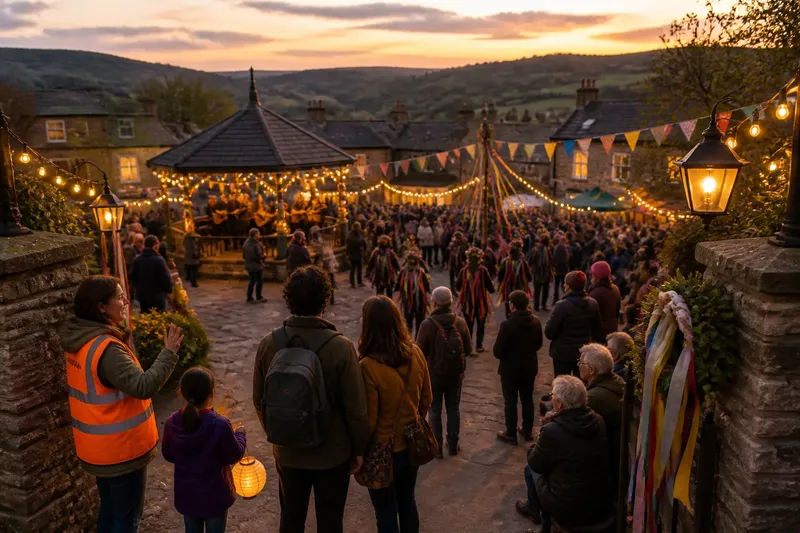
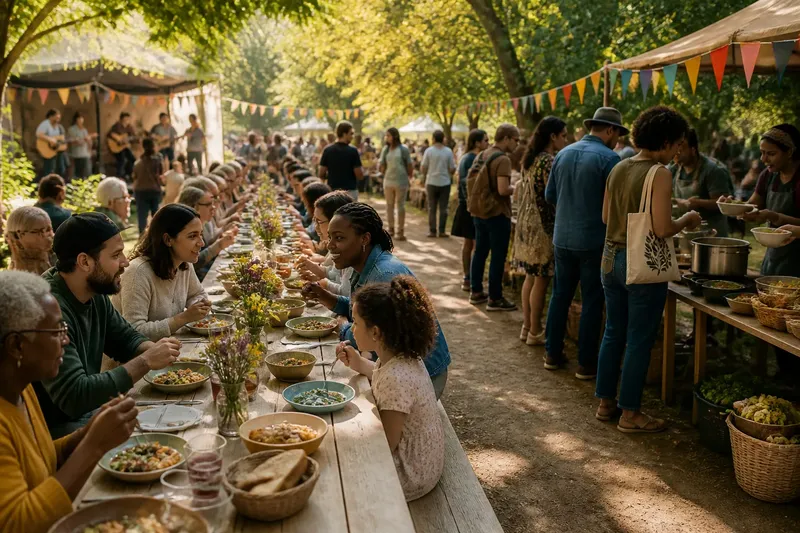
The Myth That Every Festival Custom Is Ancient
Learn how to describe a festival custom’s history carefully, distinguish local memory from evidence, and avoid turning a recent tradition into ancient fact.
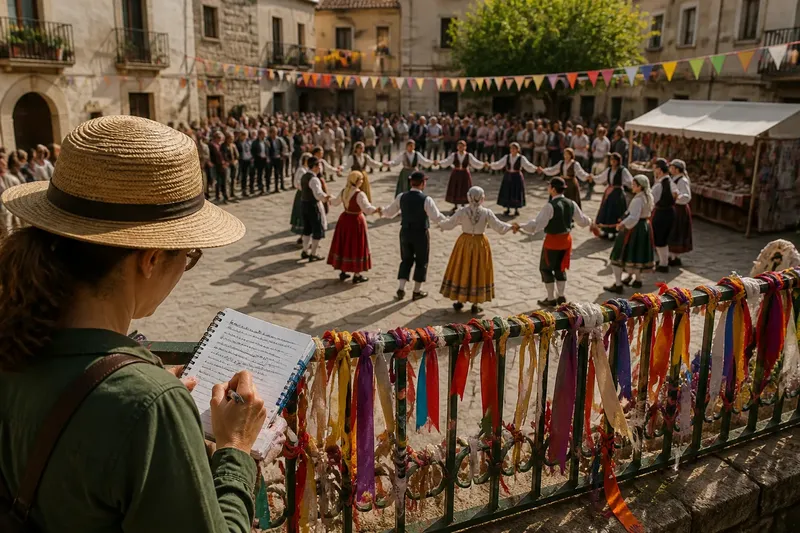
You hear the bell, watch a ring of dancers form, and someone beside you says, “They’ve done this for centuries.” A festival custom can feel older than the street beneath your feet. To describe its history responsibly, start with what you can observe and trace—not with the age its atmosphere seems to promise.
Festival customs need evidence, not just an old feeling
The idea that every festival custom is ancient grows from a reasonable impression. A repeated gesture, a handmade costume, or a song passed between generations can look timeless. But a practice may have begun recently, changed shape, or been adopted from another celebration. Familiarity tells you that people know how to take part; it does not tell you when the custom began.
“Ancient” is a large claim. In casual conversation, it can mean older than the current organizers, remembered by grandparents, documented in a local archive, or rooted in a much earlier practice. Those meanings are not interchangeable. Before using the word, decide what period or evidence you mean.
Begin with the custom as it exists now. Notice who takes part, what they do, where it happens, and whether it appears in the program, on a sign, or only through informal participation. Keep observation separate from interpretation. “Visitors tie colored ribbons to the fence” describes what you see. “This is a centuries-old wish ritual” adds a historical claim that needs support.
Start with the people who carry the custom
Ask a festival organizer, performer, craftsperson, or longtime participant what they call the custom and how they learned it. A specific account is more useful than a broad prompt such as “How old is this?” Try asking when the person first took part, who taught them, and whether they know how the practice began.
Listen for the scope of the answer. Someone may remember the custom from childhood without knowing its beginning. An organizer may know when it entered the festival program but not where the underlying idea came from. A local maker may recognize a design as a recent adaptation of an older craft. Each person can offer useful knowledge, but their account answers a different question.
Write down names and roles only with permission, and distinguish a remembered account from a documented date. If people give different versions, preserve the disagreement rather than choosing the most romantic one. It may reveal that the custom has changed or that different groups understand it differently.
Trace the earliest record you can identify
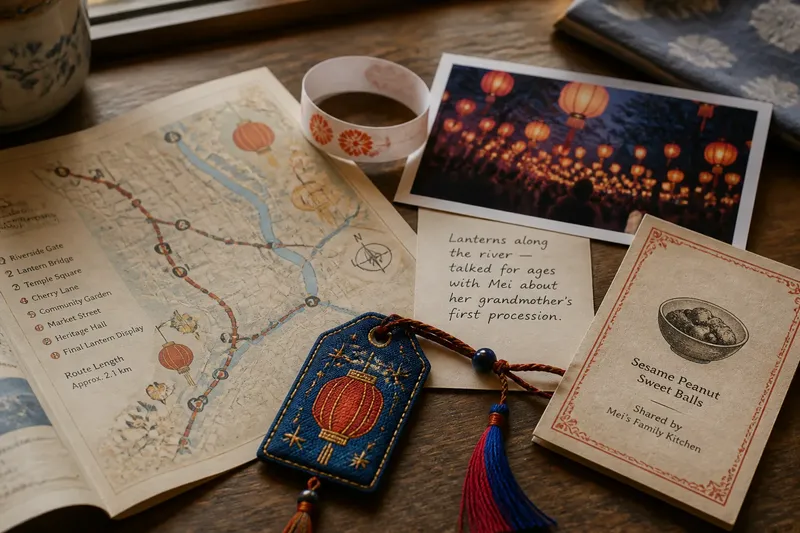
Look for records that show the custom in use. Festival programs, dated photographs, newspaper notices, committee minutes, recipe cards, and community newsletters can help establish when a particular form appeared. A photograph of a procession, for instance, may confirm that people carried lanterns by the time it was taken. It cannot establish that the practice began then, or that it existed centuries earlier.
Local libraries and historical societies may hold useful material, while festival committees may keep old programs or planning notes. Search by the custom’s name, the festival’s name, and practical terms describing what happens. Older documents may use different wording, so look for descriptions of the action as well as its present-day title.
Check what each record supports. A dated program can show that an event was scheduled; it does not necessarily show how participants experienced it. A family photograph may show a custom in one household, not across a whole community. Say what the source supports, and stop there unless another source fills the gap.
Separate continuity from origin
A custom can be longstanding without being unchanged. The route may shift, a song may gain new verses, or a handmade object may move from a private gathering into a public festival. Organizers can revive a lapsed practice or create a new one in the style of an older local tradition. These histories matter, but they do not all prove an unbroken ancient custom.
Track the parts separately: the action, the objects, the words used to explain it, and the setting. One part may have a documented history while another is recent. A festival’s ribbon-tying, for example, might use a local weaving technique while the public ritual began after a new community event was organized. Describing those layers is more accurate than assigning one age to the whole custom.
Say you are writing a short label for a festival display. You find a program showing that neighbors began carrying decorated baskets during a revival event, and an older family account describing similar baskets at private gatherings. You could write: “The public basket procession began with the revival event; some families recall using decorated baskets at home earlier.” That wording distinguishes the documented public practice from the remembered household custom without claiming the records prove an uninterrupted tradition.
Choose wording that matches what you know
When the origin is uncertain, careful language can still be direct. Match the wording to the evidence:
- For a dated record: If the earliest program you located includes the custom, say, “The festival program includes this custom by the time of that program”; if it does not, avoid claiming a documented date.
- For oral memory: If participants recall taking part across generations, describe that memory; if accounts cover only one person’s experience, state that narrower scope.
- For a known start: If organizers identify when they added the public version, say it was introduced as part of a later festival program; if the start is unclear, leave it undated.
- For a possible connection: If people identify a plausible link to an older local practice but its origin is unclear, describe it as a possible connection; if no support exists, do not imply one.
- For change over time: If accounts or records show the practice changed, describe the specific change; if they do not, avoid presenting a change as established.
- For differing accounts: If participants or records offer distinct versions, name the difference and its sources; if you cannot resolve it, keep the origin open.
Avoid turning “people say” into proof. If a guide or brochure calls a custom ancient, ask whether it names a source or repeats a familiar description. You can report that the festival presents it as ancient while clarifying that the evidence you have does not establish that age. Treat community memory with respect; describe it as memory unless records support a stronger claim.
How should you describe a festival custom’s history?
What makes a custom feel ancient?
Repetition, familiar songs, handmade objects, and shared participation can give a practice a deep sense of continuity. That feeling is part of its present meaning, but it cannot establish its age on its own.
Can oral history establish when a custom began?
Oral accounts can show how people remember learning a practice and what it has meant within families or groups. They can set limits on what someone personally witnessed, but they do not automatically identify the custom’s first appearance.
What if sources give different origin stories?
State that accounts differ and identify their basis, such as a participant’s memory or a dated program. If you cannot resolve the difference, leave the origin open instead of selecting the version that sounds oldest.
Is “traditional” safer than “ancient”?
Not necessarily. “Traditional” can imply continuity without explaining its scope, so specify who practices the custom and what kind of continuity is known. “A tradition among participating families” is clearer than an unqualified claim that it is traditional.
Check local wording before you publish
Before sharing a description, compare it with the festival’s own wording and ask a relevant organizer or community representative whether it misstates how people understand the practice. This matters especially when a custom belongs to a particular cultural or religious group. Do not present an outside guess as that group’s explanation, and do not flatten several versions into one tidy origin story.
Where local rules, cultural protocols, or permissions govern access to records or images, follow the relevant guidance and ask the appropriate local authority. An archive entry or photograph may be available to view without permission to reproduce it. Keep that distinction clear.
Festival customs can feel time-honored because people keep giving them meaning. For an accurate account, name what participants do, say who remembers it, and connect each historical claim to the record that supports it. When you write about festival customs, an unknown starting point is worth stating plainly; it is more useful than an invented age attached to a real community practice.