A Long Table or Small Serving Stations? How Festival Meal Layout Shapes the Gathering
Festival meal layout shapes conversation, choice, and pace. Compare long tables with serving stations to choose an arrangement that suits the gathering.
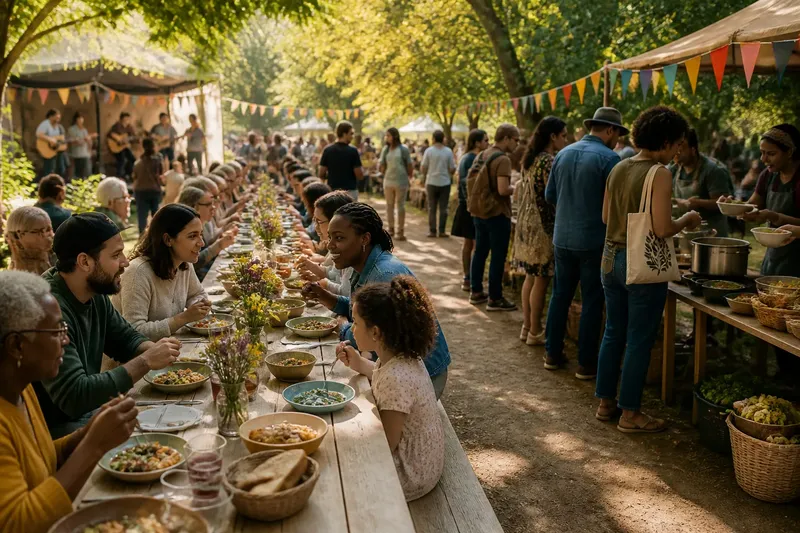
At a neighborhood festival, a pot of stew can draw a line past the musicians while a row of tables fills with people who arrived separately. The festival meal layout is already shaping the gathering before anyone takes a bite. A long communal table and a set of small serving stations offer different ways to move, meet, choose, and settle in.
Neither arrangement is automatically more welcoming. The useful question is what the meal should make easy: sitting alongside strangers, browsing dishes, keeping a queue moving, or letting people arrive in waves. Once that aim is clear, the layout becomes a form of hospitality rather than a furniture decision.
Start with the meal’s social shape
A long table makes eating visible and shared. Diners sit in a continuous row, pass bowls, and notice who is nearby. That can encourage conversation across households, especially when a host or volunteer helps bridge gaps. It also asks people to choose a seat and remain near it while they eat.
Serving stations make the food the point of movement. People approach a dish, decide what they want, and carry it to a separate place to sit or stand. That movement can create casual encounters: someone asks what is in a pot, yields space to a child, or joins a friend near the drinks. The meal feels less tied to a single shared seating moment.
Think of the distinction as a choice between shared seating and shared circulation. Both can bring people together, but they put the social contact in different places. A table concentrates it among diners; stations spread it along the route from food to seat.
A long table turns passing food into a ritual
At a communal table, the small gestures matter. Someone passes bread, points out a bowl of beans, or asks a neighbor to hold a place while they fetch water. These exchanges make the meal feel collective without requiring a speech or organized activity. The table itself gives people a reason to interact.
That closeness comes with a trade-off. A diner who wants to leave for a performance may need to ask others to make room. People with different arrival times can interrupt a seated group as they look for places. Long benches can make entry awkward for anyone who needs an easier way in or out, so individual chairs and clear access at the ends can make the arrangement more flexible.
Food served in shared bowls can reinforce the sense of participation, but it also makes the table responsible for more than conversation. Diners need room to reach dishes, set down plates, and keep serving utensils distinct. If the menu includes foods people may not eat, a clearly marked option at the table helps guests decide without turning the meal into a public explanation of their preferences.
Use a communal table when the meal is meant to gather people into one sustained sitting, and make leaving a seat feel easy rather than disruptive.
Serving stations give choice more room
Separate serving points suit a crowd that arrives gradually or wants to move between eating and other festival activities. A guest can choose a portion, sit with companions, then return for another dish without asking the table to pass it. Stations can also keep distinct foods apart, which helps people understand the menu and choose at their own pace.
That freedom depends on the route. If the main dish, drinks, and utensils all sit at one narrow point, the line can become the gathering’s most memorable feature. Spreading related items into sensible stations can reduce crowding: plates near the beginning, food in a clear order, and drinks away from the busiest serving point. Leave enough room for someone to pause and read a dish label without blocking everyone behind them.
Separate points also change where conversation happens. A person waiting for soup may chat with the person behind them, but the exchange can be brief. Longer conversations are more likely after people find somewhere to sit. Provide tables, benches, or standing space that do not obstruct the queue, and guests can choose between a quick bite and a longer visit.
Stations work especially well when the menu has several distinct dishes or when people will eat at different times. They are less helpful if guests must carry multiple hot or awkward items across a crowded area. A nearby place to set down a plate can make the route feel more considerate.
How should you choose between tables and stations?
Which layout encourages strangers to talk?
A long table places unfamiliar diners beside one another and gives them shared objects to pass. Stations can prompt brief exchanges while people serve themselves, but seating determines whether those contacts continue.
Which arrangement suits a meal with many dishes?
Stations make distinct dishes easier to browse and can keep serving tools associated with the right food. A table can handle a multi-dish meal too, but it needs enough room for bowls, utensils, and plates without crowding diners.
What works when guests arrive at different times?
Stations let late arrivals serve themselves without interrupting a seated group. A long table can still work if guests may join at open ends and the meal does not depend on everyone sitting down together.
Can a festival combine both arrangements?
Yes. Stations can hold the food while communal tables provide shared seating, preserving choice at the serving point and conversation at the meal. Keep the route between them obvious and leave space for people carrying plates.
Plan the route before placing the furniture
Imagine a festival serving vegetable stew, bread, and fruit while a small music performance begins nearby. The organizers expect guests to arrive throughout the afternoon. They place stew and bread at separate points, put fruit near the seating area, and leave a clear path to benches. The intended result is easy to observe: guests can choose a dish without blocking the route, then sit together if they want a longer conversation.
The same menu could create a different mood if the bowls were placed along one long table. Diners would have more chances to pass food and talk while seated, but latecomers might need to wait for space or interrupt a group. The food has not changed; the arrangement has changed what guests must do to join in.
Before setting out chairs or tables, trace the likely journey from entrance to food, eating place, water, and exit. Consider where a queue could form and whether it would cross a path to the stage, toilets, or other festival activity. Keep the serving route separate from the main passage where possible, and avoid placing a popular dish where people have no room to pause.
Also think about how guests carry food. A plate piled with several items is harder to manage while standing than a small bowl or wrapped portion. If people need both hands for an item, a nearby seat or ledge matters more than a decorative centerpiece. Choose serving vessels and furniture that fit the way the meal is actually eaten.
Make the arrangement hospitable to different diners
Good hospitality leaves more than one way to take part. Some guests enjoy sitting among a crowd; others prefer a quieter edge. Place a few seats slightly apart without isolating them, and make sure they remain part of the meal rather than an afterthought. For stations, keep a section of the route easy to approach and provide somewhere to rest a plate.
Clear signs can answer practical questions without making diners ask aloud. Name dishes plainly, identify common ingredients where the hosts know them, and distinguish serving utensils. If a food’s contents or preparation are uncertain, do not guess on the sign; ask the cook or describe only what is known. For food handling and access requirements, follow the venue’s rules and relevant local guidance.
Sound and weather can shape the experience too. A table placed beside a loud performance may make conversation difficult, while a station exposed to sun or rain may be uncomfortable to wait at. Choose positions that let people hear one another and keep food service orderly. A sheltered eating area can be more useful than extra decoration.
Let the meal’s purpose decide the layout
Festival meal layout is not a contest between togetherness and convenience. A long table creates a shared sitting and makes passing food part of the occasion. Serving stations offer choice and movement, with conversation more likely to gather around the food route and the places where guests settle.
Decide what the gathering needs most: a meal that invites people to stay together, a flexible service for arrivals spread across the day, or a mixture of the two. Then walk the space as a guest would, carrying a plate and looking for a place to pause. The most welcoming arrangement is the one that lets people eat comfortably and join the company in their own way.