A First Festival Visit in the Shoulder Season
Plan a first festival visit in the shoulder season with a flexible route, useful weather gear, and time to notice local rhythms without rushing.
Your first shoulder-season festival visit begins with a jacket over one arm and a question at the bus stop: is the riverside lane part of the event, or just the way in? That uncertainty is useful. A gathering between peak seasons often has a softer tempo, and a little preparation can leave room to notice how the place moves instead of racing from attraction to attraction.
Let the season set the pace
Shoulder season is the stretch between a place’s busiest periods, when weather and attendance can feel less predictable. A harbor festival may meet cool wind and early dusk; an orchard gathering may sit between blossom and harvest. The event’s shape matters more than the label. Look at its posted schedule and map, then identify the parts tied to a particular hour, such as a procession, a market opening, or a communal meal.
Choose one time-specific event as your anchor. Treat the rest as possibilities, not obligations. That distinction keeps the day from becoming a race against a program printed to show everything that could happen, not everything one visitor must do.
Pick one anchor event and leave the rest open.
Make a light plan before you go
Start with the practical details that shape your arrival: public transit or parking, the location of the entrance, the event’s accessibility information, and whether food vendors accept cash, cards, or both. Check the forecast close to the day, but pack for the conditions the season can turn toward: a light rain shell, a warm layer, and shoes suited to uneven paths. Keep the bag small enough to carry comfortably.
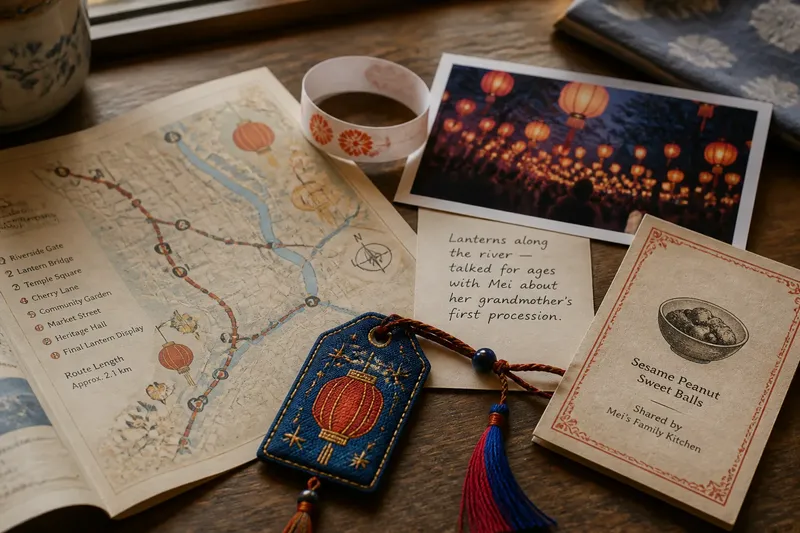
Read the schedule for timing clues. A craft demonstration may repeat, while a lantern walk or harvest blessing may happen once. If an activity depends on weather, mark it as a possibility rather than building your entire visit around it. For details that depend on a particular organizer’s rules or venue instructions, check those directly.
Choose a meeting point in case your group gets separated. A recognizable sign, information tent, or gate is easier to describe than “near the music.” If you are going alone, note where you can sit and how you will get home if the weather changes or you feel ready to leave.
Take a settling-in loop on arrival
Give the entrance a moment before heading toward the busiest sound. Find the information board, restrooms, water access, and a place to pause. Then make a slow loop around the outer edge of the gathering. You may spot where people queue, where families spread blankets, which stalls are serving meals, and which paths lead away from the main crowd.
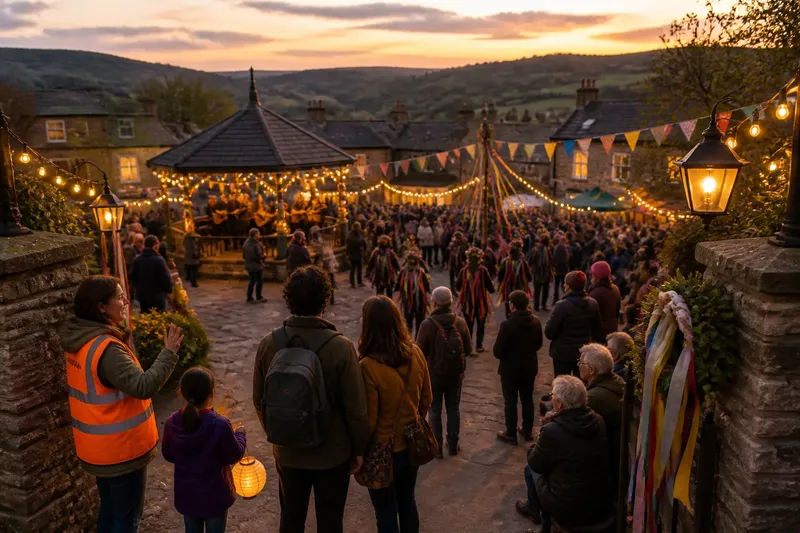
This first circuit is reconnaissance, not wasted time. It helps you choose a comfortable route and notice the local rhythm: perhaps people gather near a bandstand before a ceremony, or vendors begin packing while a quieter performance starts. Watch for signs and follow the flow without assuming that every space is open to visitors.
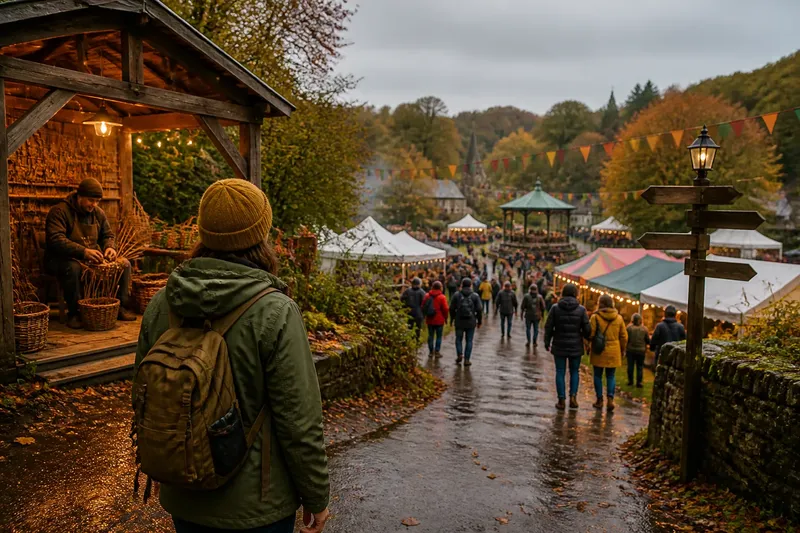
Imagine you arrive at a small autumn fair as a drizzle begins. You notice a covered craft shed on your first loop, so you shelter there, watch a basket maker work, then head to the outdoor food stalls when the rain eases. The observable result is a visit shaped by the weather and the event’s pace, rather than a hurried attempt to follow a fixed route.
Choose one anchor and two nearby possibilities
Once you have a sense of the grounds, settle on a simple plan: your anchor event, one nearby activity before it, and one option afterward. Keep the choices close together where possible. Crossing a large site repeatedly can eat into the time that makes a festival feel like a gathering instead of a checklist.
Build a pause into the route. Sit with a warm drink, listen from the edge of a music area, or watch people prepare a shared space. These are not filler moments. They let you understand what visitors do between the advertised events, which can be as revealing as the program itself.
If a queue is long or an activity is full, choose the nearby alternative without treating the change as a failure. A seasonal event may shift with wind, rain, daylight, or the number of people who arrive. Flexibility is practical, not a demand to improvise every detail.
Respect customs while staying curious
At an unfamiliar gathering, small signals can tell you how to take part. Look for posted guidance, watch how local attendees approach a shared activity, and ask an organizer when the invitation is unclear. Some rituals welcome visitors; others are better observed quietly. A camera is not an automatic pass into private or sacred moments.
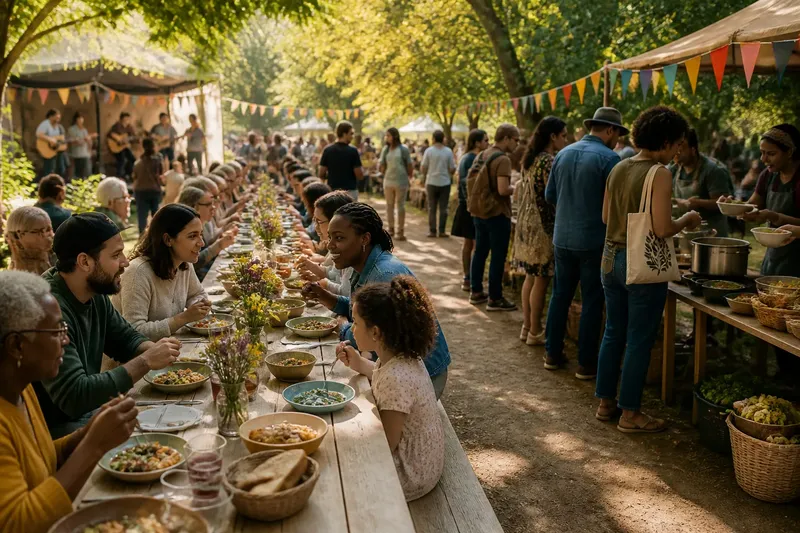
Food can offer an easy way to follow the event’s seasonal character. Ask a vendor what is being served and whether there is a local way to eat or share it. If you have dietary needs, describe them plainly and let the vendor explain what they can accommodate. You do not need to try everything to appreciate how a menu reflects the time of year.
What should you bring for changeable weather?
Is a rain jacket better than an umbrella?
A rain jacket keeps your hands free for tickets, food, or a child’s hand, while an umbrella can be awkward in a crowd or on a narrow path. Choose based on the forecast, the event’s rules, and the space around you; a removable warm layer helps if the weather clears.
How do you avoid feeling rushed?
Choose one scheduled event and leave open space around it. If you have companions, agree that anyone can suggest a pause or an early departure without needing to justify it.
What if the schedule changes?
Check the event’s information point or official updates, then choose a nearby activity that still fits your energy and the weather. A changed program can become a chance to notice another part of the gathering.
How long should a first visit last?
There is no ideal duration for every festival; the right length depends on the site, conditions, and your comfort. Decide in advance how you will leave, but let the day’s actual pace guide whether you stay for another event.
Leave with one detail to remember
Before heading home, pause long enough to name one thing you noticed: a particular smell from a food stall, a tune drifting across the square, or the way people made space for a procession. That small detail gives your first festival visit in the shoulder season a shape without asking you to account for every stage or stall.
Check your route back and collect any belongings before the crowd thins. If you would like to return, note what you might do differently while it is fresh—perhaps arriving for the market’s opening or bringing a warmer layer. A relaxed first visit is not the one that covers the most ground; it is the one that leaves you able to picture the gathering as a place with its own unfolding day.